

** NEWS UPDATE **
September 7th, 2022
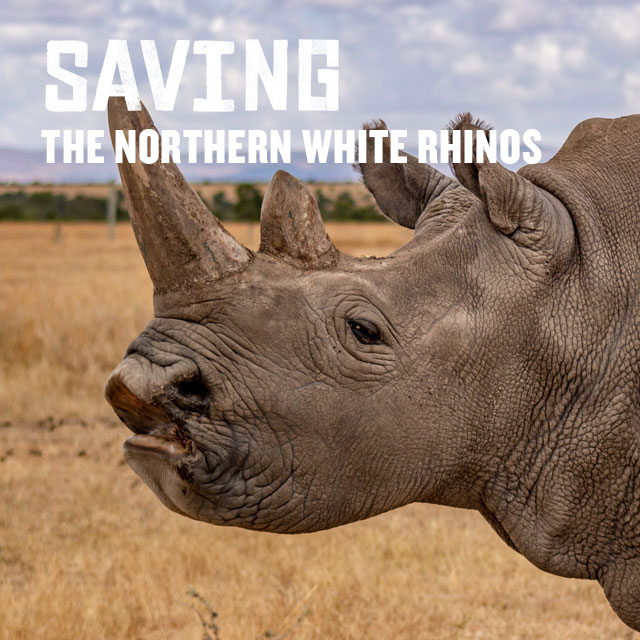
Three years after starting its ambitious programme to save the northern white rhino from extinction through advanced assisted reproduction technologies, the BioRescue consortium draws a positive interim conclusion: Following the 10th event of harvesting immature egg cells (oocytes) in the northern white rhino female Fatu, the international team produced 5 additional embryos – bringing the total to 22 sired by two bulls. This nourishes the hope to eventually succeed in producing new offspring and give a keystone grazer of Central Africa a new future. At the same time, the consortium places the highest value on respecting the life and welfare of the individual animals involved. Regular veterinary and ethical assessments of oocyte collection procedures show that Fatu handles the procedures well and shows no signs of detrimental health effects.
The 10th oocyte collection in northern white rhinos (NWR) was performed by a team of scientists and conservationists from the Leibniz Institute for Zoo and Wildlife Research (Leibniz-IZW), Ol Pejeta Conservancy, Safari Park Dvůr Králové, Kenya Wildlife Service (KWS) & Wildlife Research and Training Institute (WRTI) on July 28, 2022, at Ol Pejeta Conservancy in Kenya. The BioRescue team was able to collect 23 oocytes from Fatu, the younger of the two remaining NWR females. Oocyte collections from Najin, Fatu’s mother, were ceased in 2021 following an in-depth ethical risk assessment. The oocytes were immediately air-lifted to the Avantea laboratory in Cremona, Italy. Following maturation, 7 of the oocytes were fertilized using cryopreserved, thawed semen from the deceased NWR male Angalifu. Eventually, 5 embryos of Fatu were successfully produced and cryopreserved in liquid nitrogen.
This collection followed on from the 9th oocyte collection held at the same location and by the same team on April 24th. Out of 16 collected oocytes, 3 embryos were produced in the Avantea laboratory, again using the semen of Angalifu. Successful results of both procedures raised the total number of NWR embryos produced to 22 – all of them from female Fatu, with half of them sired by the deceased male Suni who was born in Safari Park Dvůr Králové, Czech Republic, and the other half sired by Angalifu who lived in San Diego Zoo Safari Park, USA.
Once the protocol to transfer the embryos to surrogate southern white rhino (SWR) female recipients is optimized, the embryos will be the foundation of a new NWR population, eventually destined to step back into their ecological role as keystone grazers in Central Africa.
To set up suitable conditions for a successful embryo transfer, the team has been carefully following the interactions of the sterilized SWR bull Owuan, who serves as the oestrus detector, with the possible surrogate females that share an enclosure with him. Once the conditions allow it, the BioRescue team will attempt to conduct an embryo transfer – first with SWR embryos to demonstrate that the whole procedure works properly before the team uses the extremely valuable NWR embryos. The team is currently considering whether adding more SWR females to the program might increase the chance of achieving the first successful embryo transfer.
** NEWS UPDATE **
October 21st, 2021
While attempting to save the northern white rhinoceros from extinction through advanced assisted reproduction technologies, the scientists and conservationists of the BioRescue consortium place the highest value on respecting the life and welfare of the individual animals involved. In a special, in-depth ethical risk assessment, the team has reached the decision to retire the older of the two remaining females, 32-year-old Najin, as a donor of egg cells (oocytes). This leaves the ambitious programme with just one female that can provide oocytes, Najin’s daughter Fatu. Weighing up risks and opportunities for the individuals and the entire species rendered this decision without an alternative. This situation will further strengthen the need for stem cell-associated techniques, which are also part of the BioRescue mission as well as long-term biobanking. Najin will remain an important part of the mission as an ambassador for her kind and by transferring social knowledge to future offspring.
** NEWS UPDATE **
BioRescue creates another three northern white rhino embryos,
bringing total to 12
July 29th, 2021
In another exciting step towards the future of the northern white rhino, three more pure northern white rhino embryos have been created by the global team of scientists and conservationists working to save the species. This time, they were also able to use sperm from a different bull, improving the genetic diversity of the embryos.
** NEWS UPDATE **
BioRescue creates four new embryos and gets ready for next steps of the northern white rhino rescue mission
April 22nd, 2021
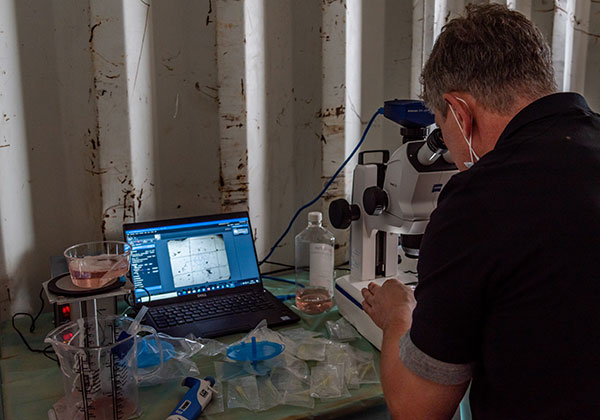
The international consortium of scientists and conservationists working towards preventing the extinction of the northern white rhino through advanced assisted reproduction technologies is pleased to announce that in March and April 2021, four additional northern white rhino embryos were produced. This is the most successful series of procedures – from oocyte collection in Kenya to in vitro fertilisation and cryopreservation in Italy – the team of Leibniz Institute for Zoo and Wildlife Research (Leibniz-IZW), Safari Park Dvůr Králové, Kenya Wildlife Service, Ol Pejeta Conservancy and Avantea has ever conducted. Additionally, the team confirmed the successful sterilisation of the southern white rhino bull Owuan, which was conducted in December 2020. The bull will now be introduced to the Ol Pejeta southern white rhino females that have been identified as potential surrogate mothers for future northern white rhino offspring.
** NEWS UPDATE **
HAPPY END TO A CHALLENGING YEAR: Two new northern white rhino embryos created at Christmas – now there are five
January 14th, 2021
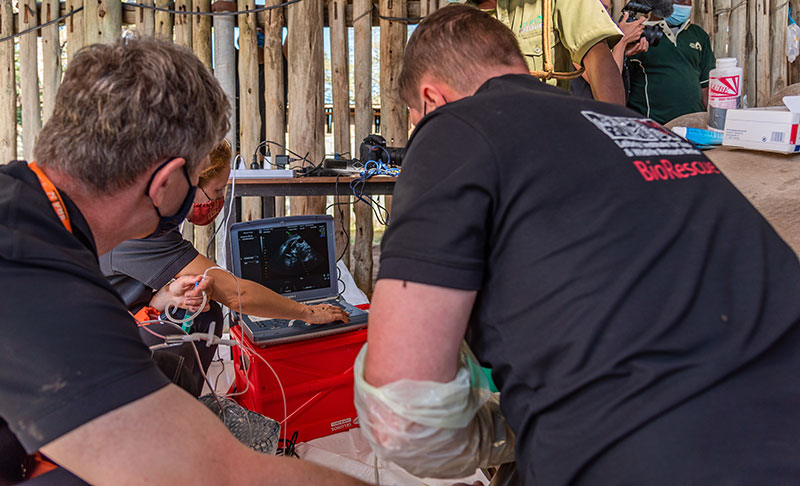
The international consortium of scientists and conservationists that is working towards preventing the extinction of the northern white rhino through advanced assisted reproduction technologies is happy to announce that in December 2020, two new northern white rhino embryos were produced. On December 13, the team of Leibniz Institute for Zoo and Wildlife Research (Leibniz-IZW), Safari Park Dvůr Králové, Kenya Wildlife Service and Ol Pejeta Conservancy successfully performed an oocyte collection in Kenya. After immediate transportation of the recovered oocytes across continents, the embryos were created at Avantea laboratory in Cremona (Italy) following maturation and fertilisation of the oocytes with the semen of Suni. They were cryopreserved on Christmas eve when they reached the blastocyst stage suitable for freezing and increase the total number of viable embryos produced so far to five. This nourishes the hope that despite challenges and delays caused by COVID-19 the northern white rhino can still be saved. The next steps in the programme are already underway.
** NEWS UPDATE **
September 4th, 2020
LATEST OOCYTE COLLECTION IN NORTHERN WHITE RHINOS YIELD NO EMBRYOS
On August 18th, the BioRescue team successfully collected ten oocytes (immature egg cells) from the last two northern white rhinos, females Najin and Fatu, in Ol Pejeta Conservancy, Kenya. This has been the third time the team collected the egg cells in order to fertilise them and to produce viable embryos. In a lab, six out of ten oocytes were injected with northern white rhino semen - despite the fact that only two oocytes were clearly matured. Unfortunately, as the quality of oocytes was poor, this time none of them developed into a viable embryo that could be used for an embryo transfer in future.
Prof. Thomas Hildebrandt, head of the BioRescue project, says: “This is a highly advanced scientific procedure that really pushes the boundaries of what is possible in in-vitro fertilisation in rhinoceroses – and in scientific process we cannot expect that every single attempt would be successful. We still have three cryopreserved pure northern white rhino embryos from the first two egg collections as a basis for our future progress. Now it’s clear how crucial it is to collect as many oocytes as possible and to develop as many embryos as possible. We can only hope that our work will not be disrupted again the way it was due to the Covid-19 pandemic. Eggs and consequently embryos are necessary for the artificial reproduction of the northern white rhino and any uncollected genetic material is lost forever.”
** NEWS UPDATE **
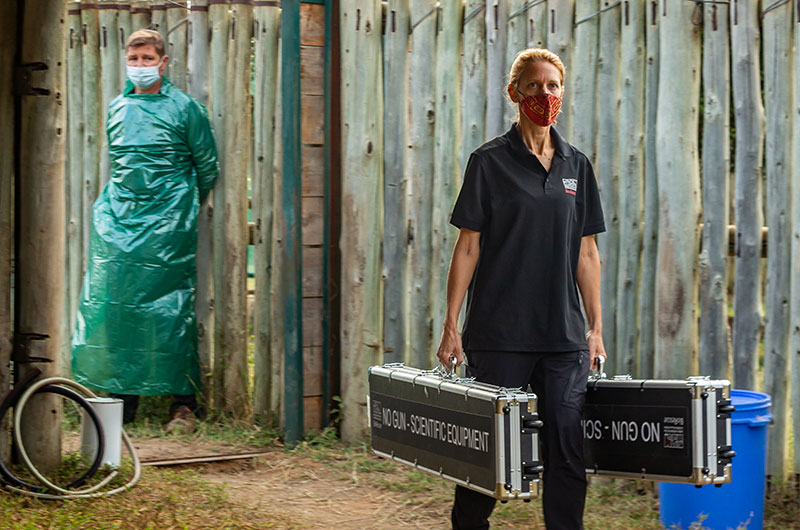
ANOTHER LAP WON IN THE RACE AGAINST TIME AND IN TIME OF COVID: Northern white rhino rescue programme resumes work with successful egg harvest
(August 18th, 2020)
** NEWS UPDATE **
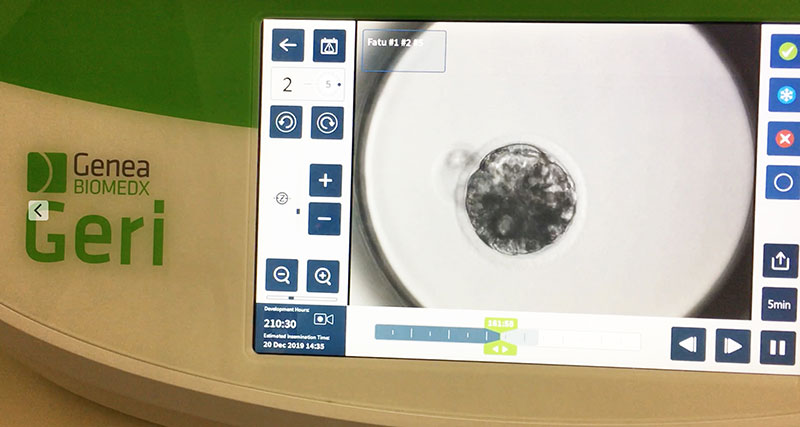
NEWLY CREATED EMBRYO NOURISHES HOPE
FOR THE SURVIVAL OF THE NORTHERN WHITE RHINO
(January 15th, 2020)
** NEWS UPDATE **
FIRST EVER IN VITRO EMBRYOS
(September 11th, 2019)
** NEWS UPDATE **
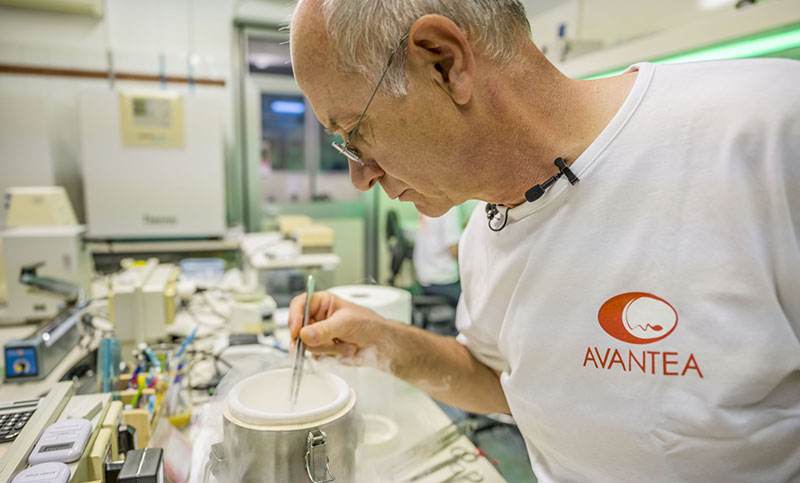
NORTHERN WHITE RHINO EGGS SUCCESSFULLY FERTILISED
(August 26th, 2019)
** BREAKING NEWS **
GROUNDBREAKING PROCEDURE BRING US ONE STEP CLOSER
TO MAKING A NORTHERN WHITE RHINO
August 22nd, 2019 was an incredible day on Ol Pejeta Conservancy.
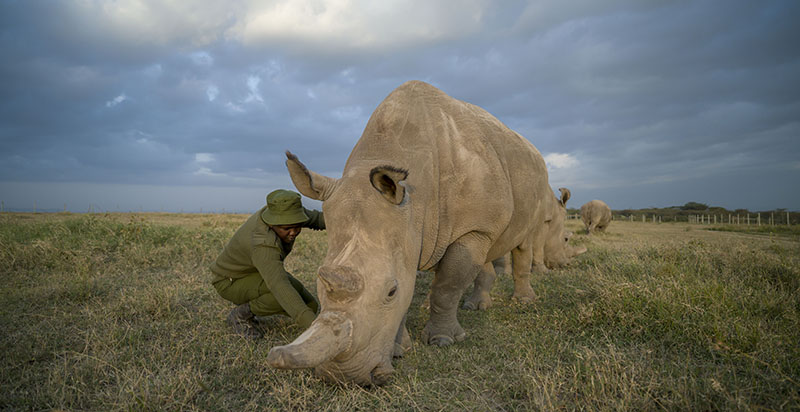
Najin and Fatu are the last two northern white rhino in the world, both of them female. Sadly, neither of them are able to carry a pregnancy, but a groundbreaking procedure carried out yesterday means they still have the chance to mother the next generation of northern white rhinos, and that there is very real hope for the future of this species.
With both Najin and Fatu under general anaesthetic, a team of vets successfully harvested eggs from the females, in an operation that has never been attempted in this species before. Both of them have come around from the operation just fine. The team was able to retrieve a total of 10 eggs, five from Najin and five from Fatu. These precious eggs will now be artificially inseminated with frozen sperm from a northern white rhino bull, and in the near future the embryo will be transferred to a southern white rhino surrogate mother.
"On the one hand Ol Pejeta is saddened that we are now down to the last two northern white rhinos on the planet, a testament to the profligate way the human race continues to interact with the natural world around us. However we are also immensely proud to be part of the groundbreaking work which is now being deployed to rescue this species. We hope it signals the start of an era where humans finally start to understand that proper stewardship of the environment is not a luxury but a necessity,"
said Richard Vigne, Managing Director of Ol Pejeta.
This was the result of years of planning and preparation, in a joint effort by the Leibniz Institute for Zoo and Wildlife Research (Leibniz-IZW) Berlin, Avantea, Dvůr Králové Zoo, Ol Pejeta Conservancy and the Kenya Wildlife Service (KWS).
For more details, read the press release and download the FAQs.
Additional links for download:
www.biorescue.org/mediapackage/
Photos: click to access dropbox - Photographers must be credited. Photos can only be used in conjunction with the northern white rhino story.
Videos: click to access dropbox - Videographers must be credited. Videos can only be used in conjunction with the northern white rhino story.
DONATE TO SUPPORT THE RECOVERY
OF THE NORTHERN WHITE RHINOS